Have you ever walked into a hotel, followed the host to reception, answered the familiar questions of arrival, and only later realised there was an artwork beside you the entire time?
Perhaps it was not the first thing you saw. Perhaps the first impression belonged to the architecture, the light, the scent of the lobby, the gesture of welcome, the small choreography between luggage, key card and room number. Yet somewhere in that moment, before the guest has fully entered the space, an artwork is already part of the encounter. It waits within the room, not to interrupt the arrival, but to open another layer of attention.
Mary Oliver once wrote, “Attention is the beginning of devotion.” In hospitality, attention often begins quietly.
A guest does not move through a hotel as one moves through an exhibition. The first encounter with art may happen while checking in, walking toward the lift, waiting for a table, returning from dinner, or closing the door of a guest room after a long day. The artwork has to find its place within service, circulation, architecture and atmosphere. It has to allow the guest to notice without demanding that the whole room stops.
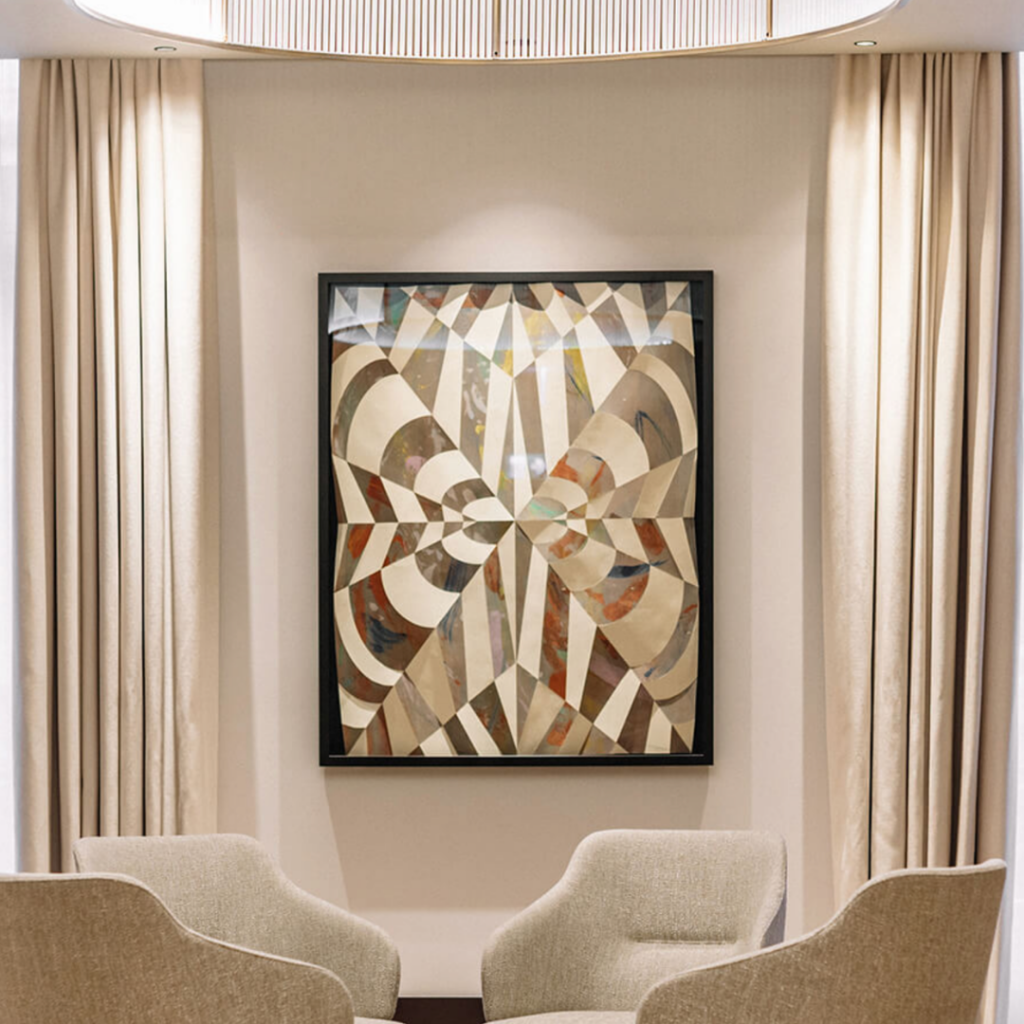
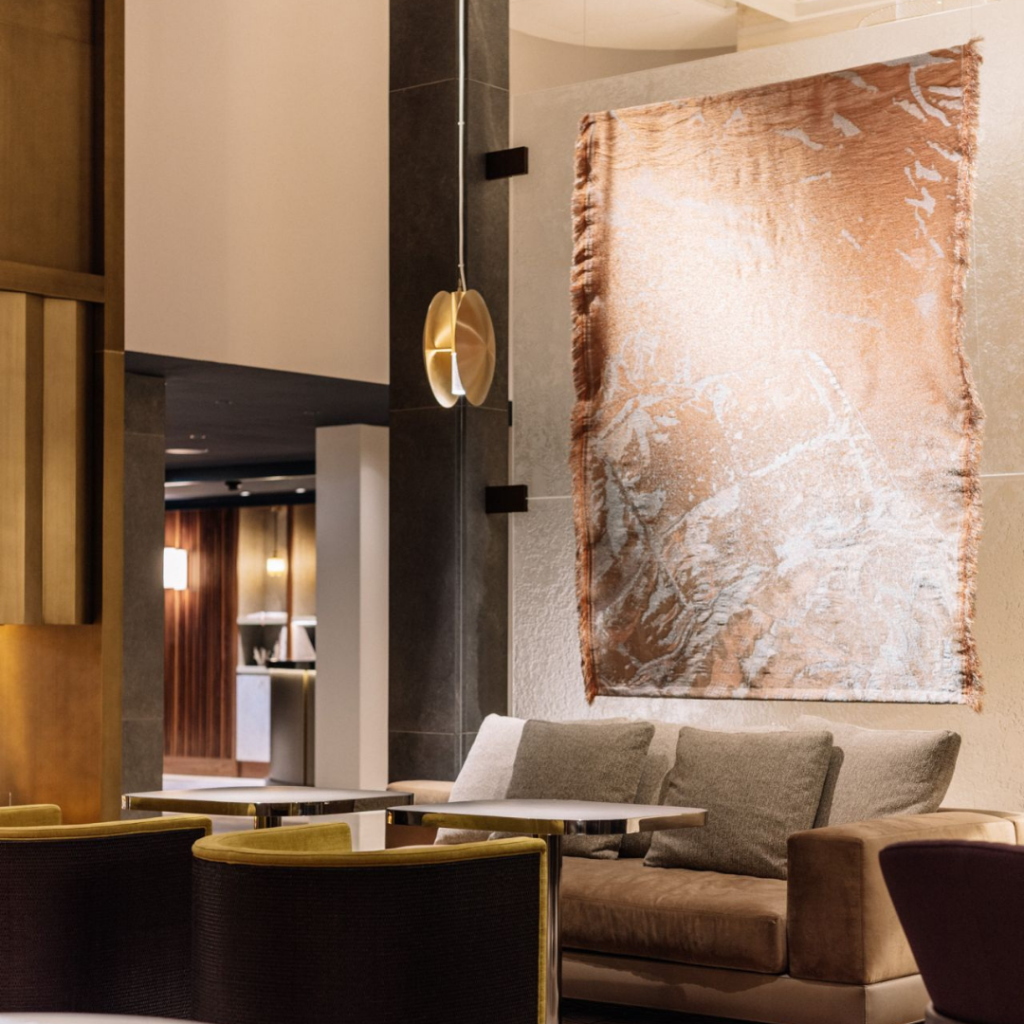
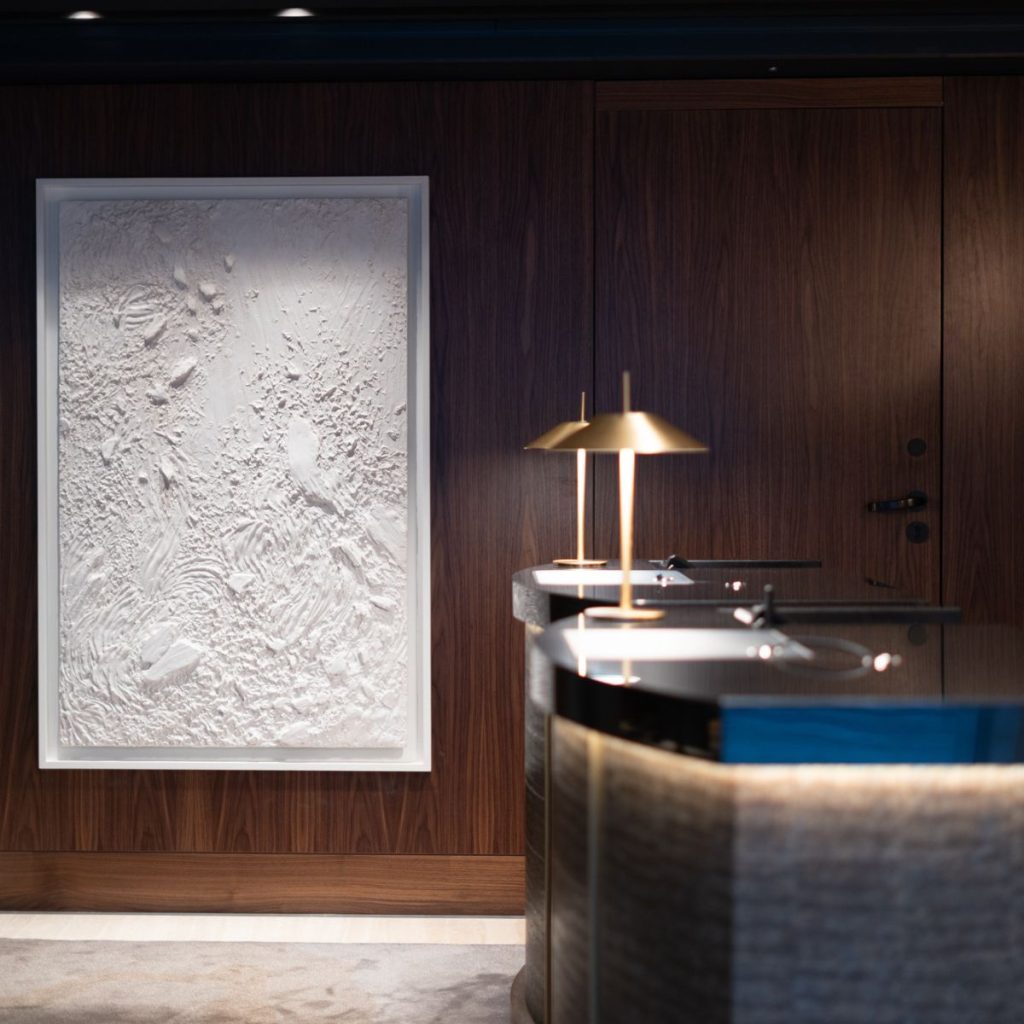
At Mandarin Oriental Savoy Zurich, the collection begins close to this moment of arrival. Works by Julia Steiner bring the intensity of drawing into the public areas, where gouache, paper and abstract composition create a concentrated field of movement and gesture. Nearby, Marie Schumann’s textile works introduce a different material language: woven surface, structure, softness and the trace of the hand. Together, they do not behave like objects added to the interior. They begin to shape the way the guest reads the property.
What happens when a hotel chooses to greet its guests not only through service, but through an artist’s way of seeing?
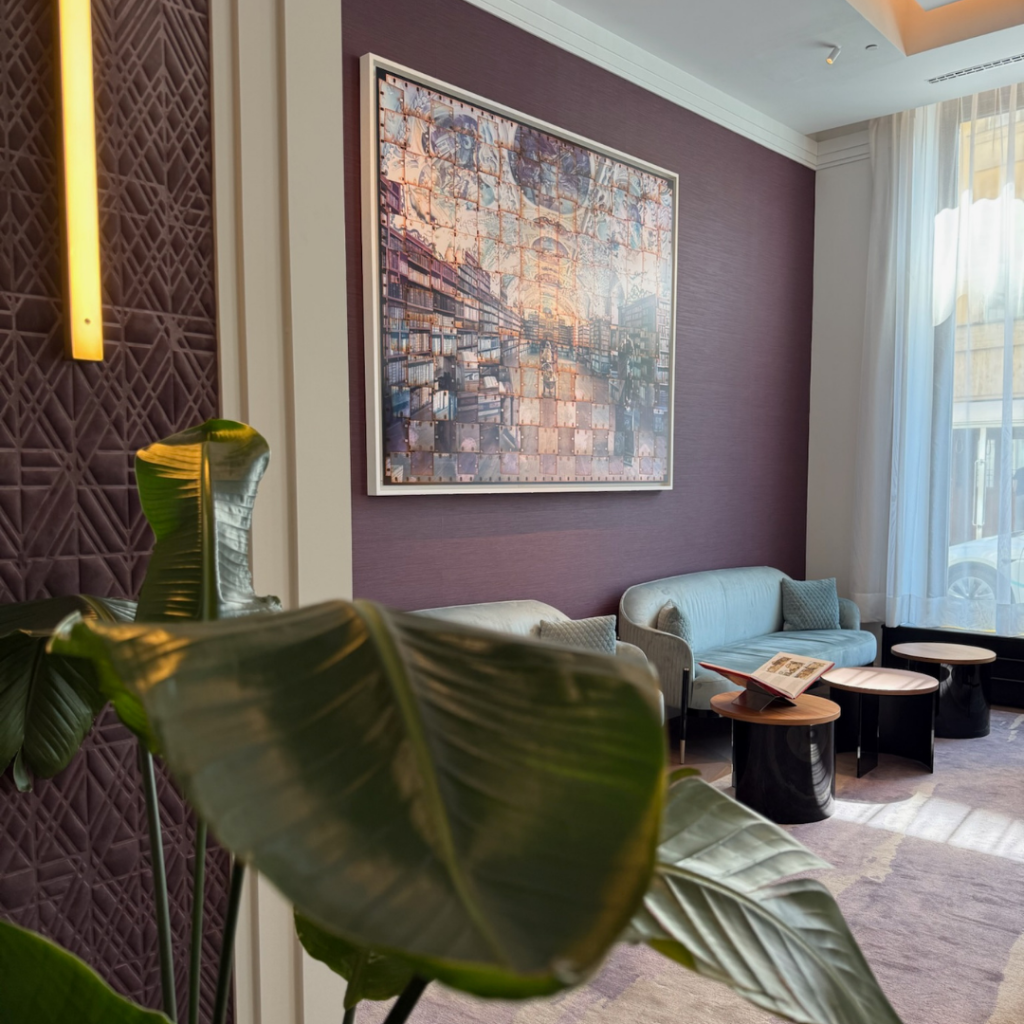
At Andaz Prague, Vendulka Prchalová’s glass installation, inspired by the Orloj, welcomes guests through material, reflection and time. The astronomical clock is not repeated as a decorative reference. Its presence is translated through glass, suspension and light, allowing Prague’s civic memory to enter the hotel without becoming literal. A guest may first notice only a shimmer, a shadow, a transparent form held in space. Later, after walking through the Old Town, the work begins to gather meaning. The city outside and the artwork inside start to speak to one another.
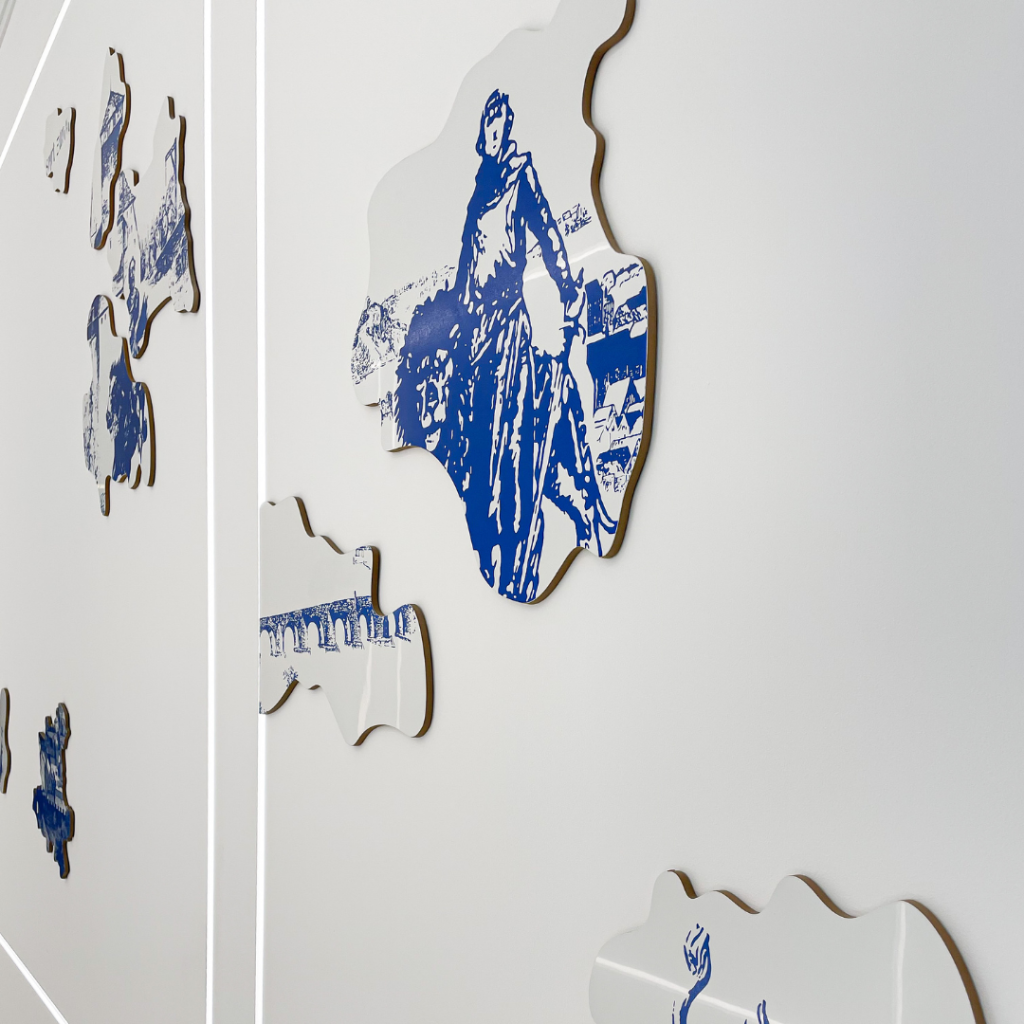
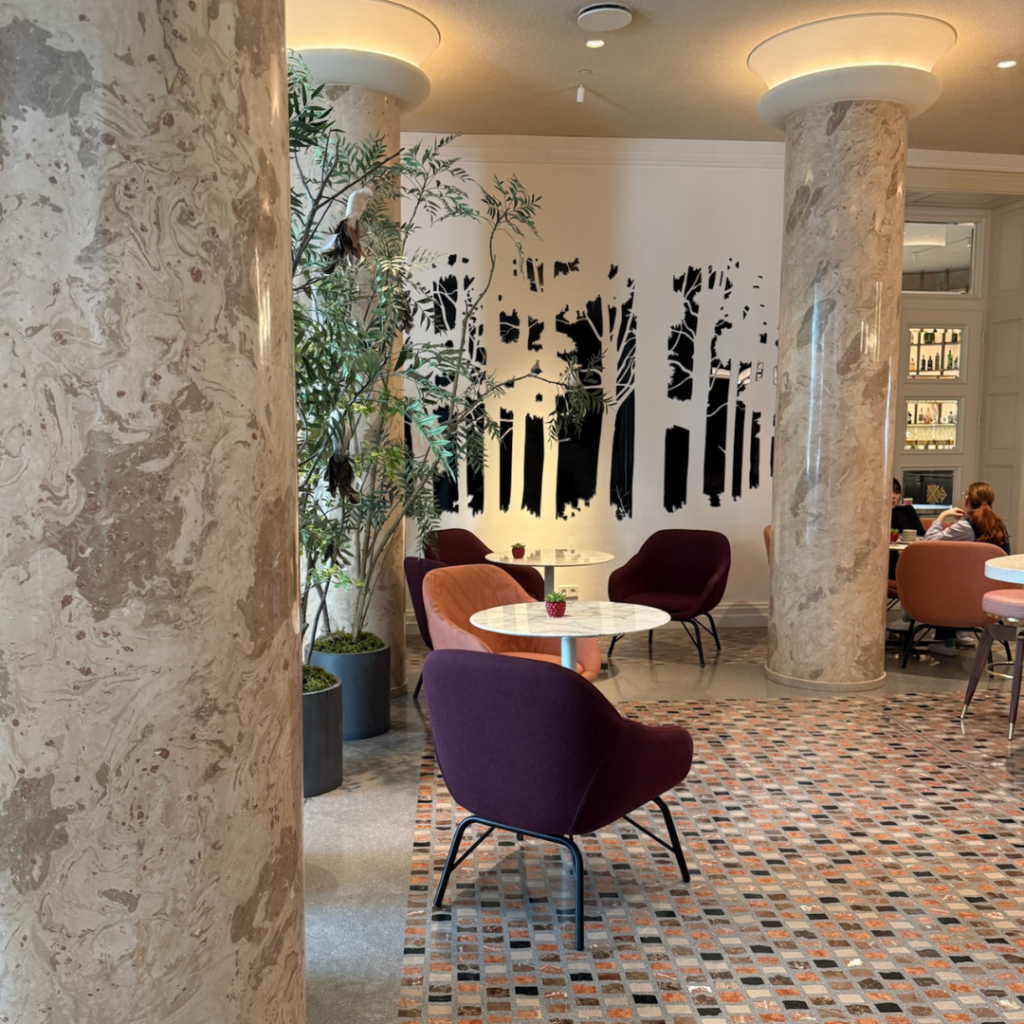
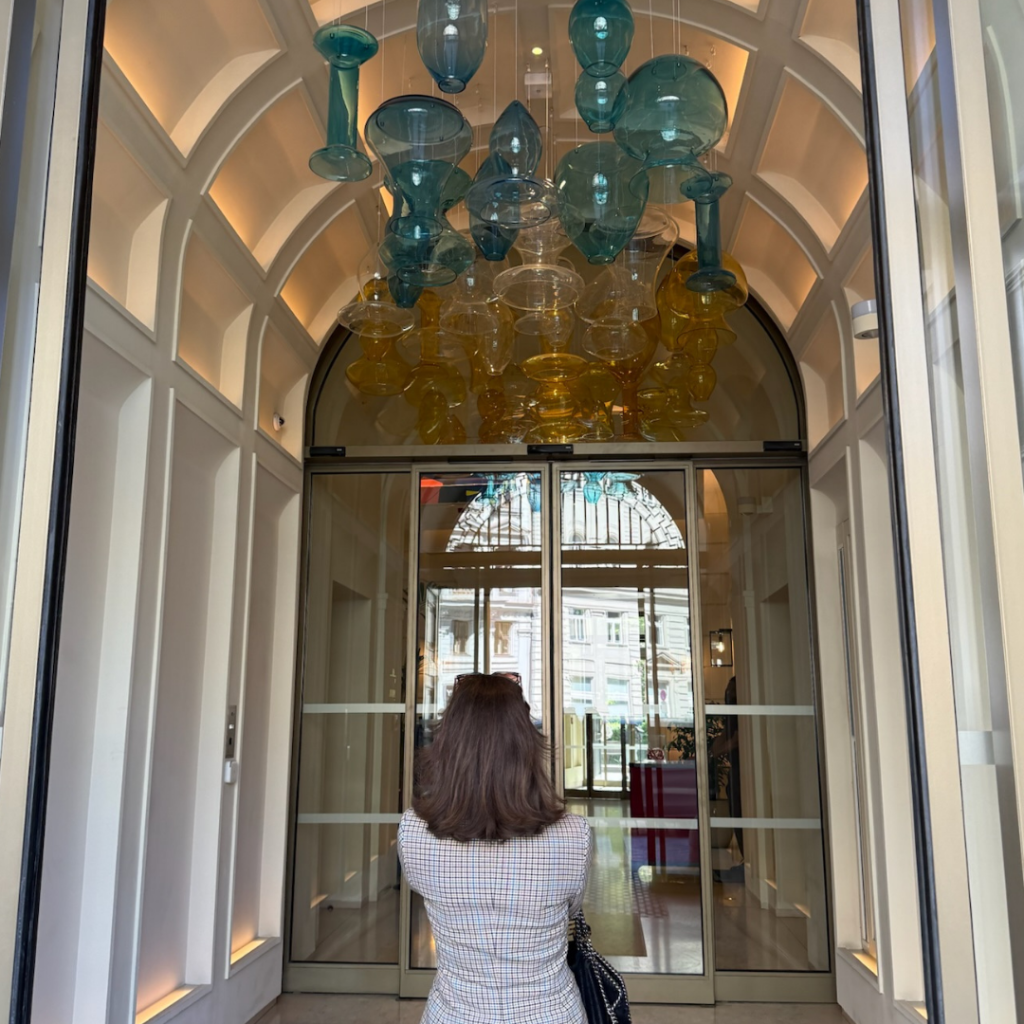
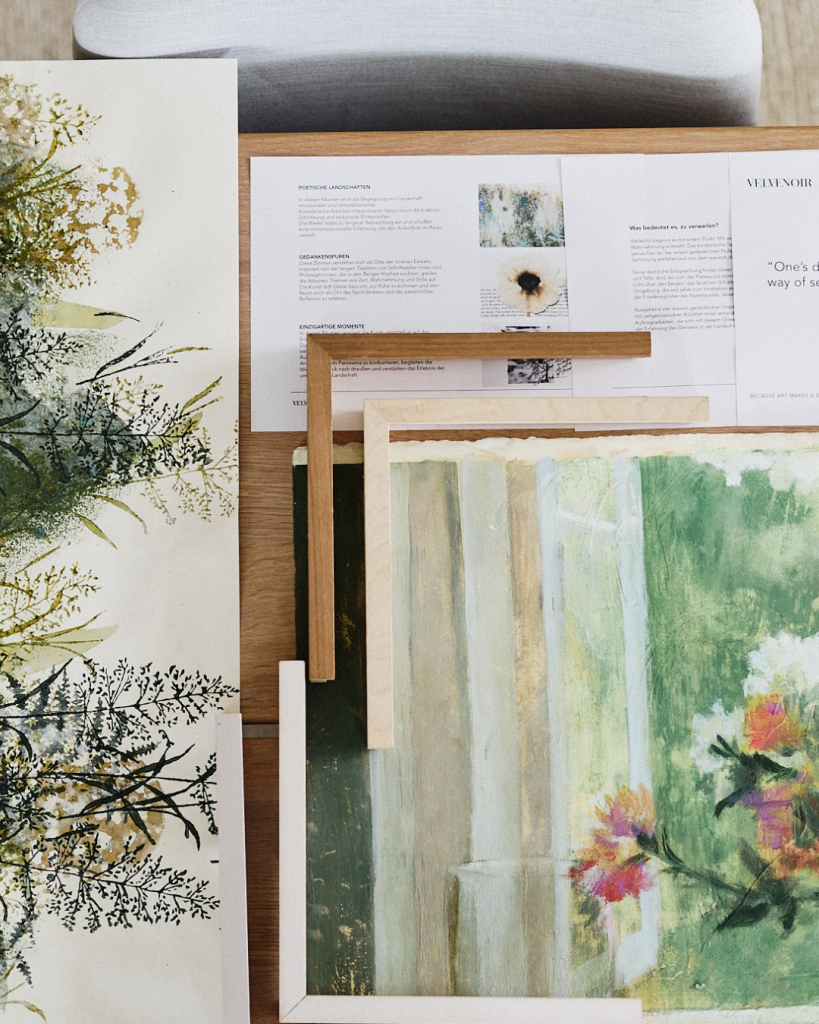
For VELVENOIR, this is where the responsibility of hospitality curation begins. Since the beginning, we have commissioned visual artists and collaborated with galleries to build authentic art collections inspired by place. These collections bring together mixed media on paper, textile art, glass, Hanji paper works, ceramic installation, photography, collage and other contemporary practices. Every medium asks for a precise spatial decision: where it can be encountered, how it receives light, how it is framed, how it is protected, and how it can remain true to the artist’s practice while entering a hotel environment.
“Once an artwork is placed correctly, it invites the guest to pause,” says Alexandra Schafer, founder of VELVENOIR. “Or, at least, it allows an emotion to unfold. It may be subtle, but that moment can become part of how the place is remembered.”
At The Florentin in Frankfurt, this question moves between the public and the private. In reception, works by Sun Young Min introduce a delicate material presence through Hanji paper and gold leaf, holding light in a way that feels almost architectural. In the guestrooms, artworks are encountered differently. A work may be seen from the desk while writing an email, from the bed in the morning, or reflected briefly in a mirror before departure. The guest is not standing before the work as in a gallery. The guest inhabits the same room, even if only for a night.
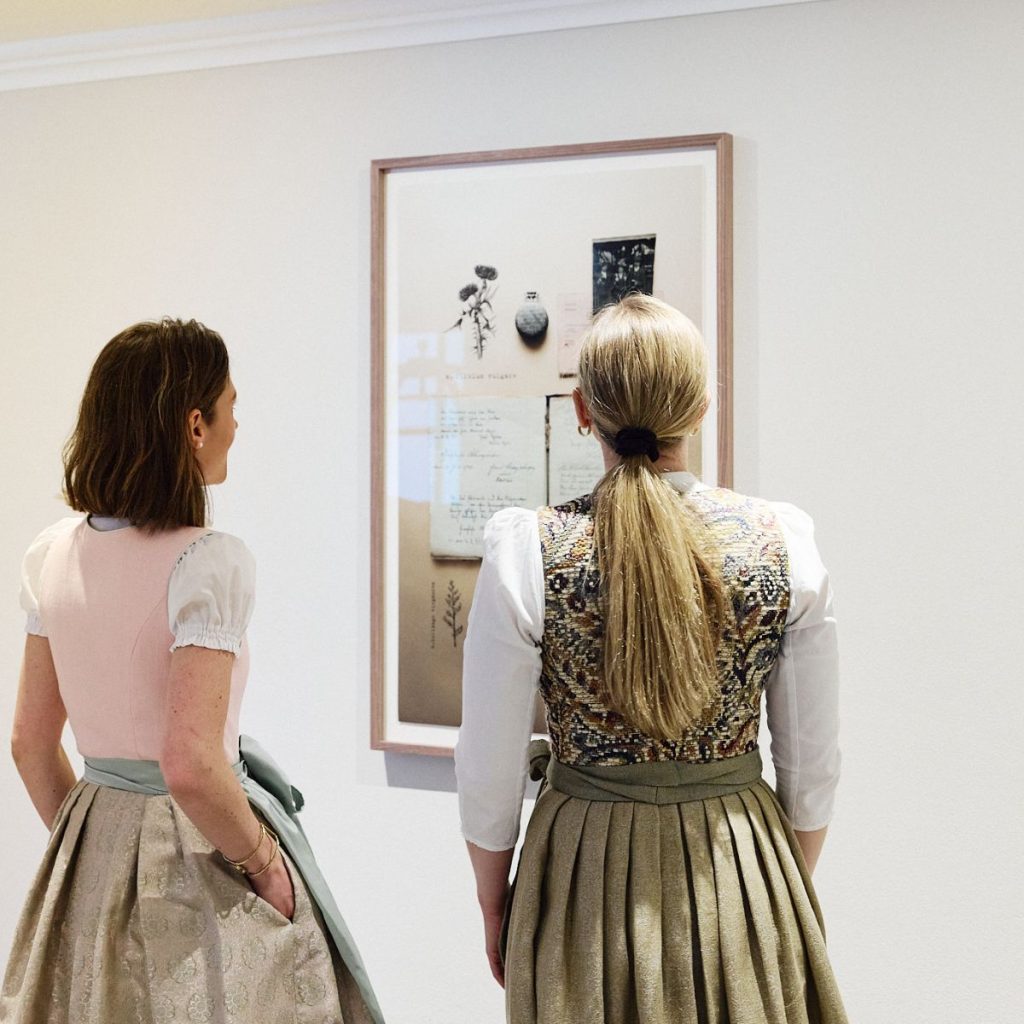
At Hotel Schneider in Obertauern, Erica Ferraroni’s works enter the hotel through memory and found material. Using old family belongings and objects gathered outdoors, she composes collages that bring together the contemporary and the inherited, the intimate and the observed. Within an alpine hotel shaped by weather, return, sport and family history, these works do not illustrate the mountain. They hold fragments of lived experience. They allow the guest to encounter place through objects that have already carried time.
The question is not only how long an artwork has to be seen. It is whether the artwork is given the right conditions to reveal itself. In passing. In return. In a moment between reception and the lift. In the room before sleep. In the corridor on the final morning.
When was the last time you noticed an artwork during a hotel visit, and what made you look again?