
A personal note on luxury residences, cultural encounters and the future of curated space
Some may think art in luxury real estate is mainly there to elevate the room, to make a lobby feel more refined, a sales apartment more complete, or a penthouse more desirable. And of course, art can do all of this. It can strengthen a visual concept, bring warmth into a space, create scale, contrast, confidence and beauty. But for me, the more interesting question is what happens when art is not only seen as something placed inside a property, but as something that helps people understand the property differently. What if art becomes part of the experience of arriving, viewing, gathering, remembering and eventually wanting to belong to a place? What if the collection is not only there to be admired, but to open a conversation?
My work has always been about thinking beyond the expected. It has been shaped by contemporary art, international collaborations, artists, galleries, interiors, travel, procurement, storytelling and the very subtle question of how a space is felt. How does a room change when an artwork enters it? How does a building become more than architecture and finishes? How does a place begin to carry identity, not only through design, but through the artists, stories and cultural references it chooses to bring in? Over the past years, I have been increasingly inspired by how certain luxury residential developments in cities such as New York, Miami, Hong Kong and Melbourne are beginning to explore this more seriously. Not always perfectly, not always in the same way, but with a direction that feels highly relevant: art is becoming part of how a residence is positioned, activated and remembered.
For me, it raises a much more interesting question: what happens when art is used to set the emotional tone of a building from the first moment? Before anyone reaches the elevator, before a meeting begins, before the building is explained, the experience has already started.
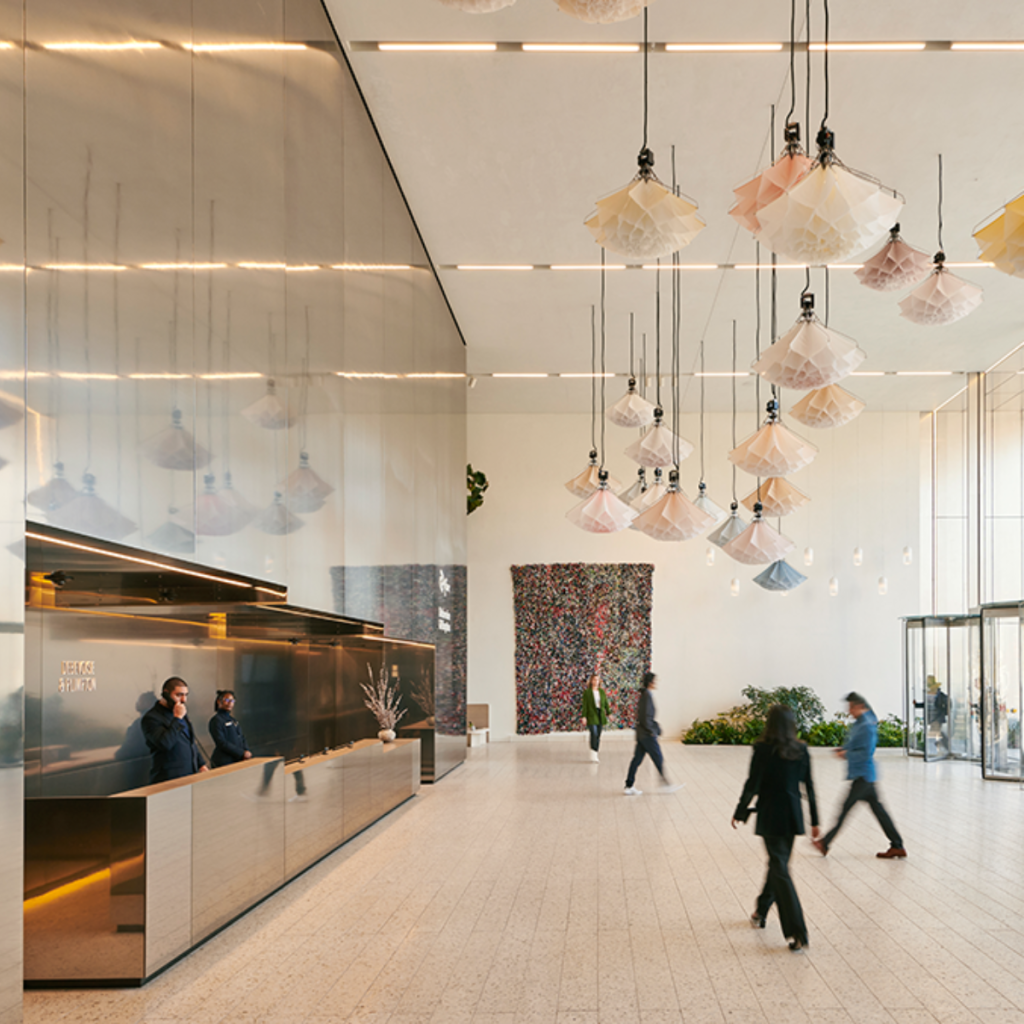
One New York reference I keep returning to is The Spiral by Tishman Speyer, designed by Bjarke Ingels Group. It is not a residential development, but it is highly relevant for the way it shows how art, architecture, landscape and arrival can become one experience. The building extends the idea of the nearby High Line upwards, with a ribbon of terraces and greenery rising through the tower, but what interests me especially is the lobby. Here, the arrival is shaped through natural light, planting, materials and Meadow, a kinetic installation by Studio DRIFT. The work opens and closes like a field of mechanical flowers, responding to movement and light, and immediately changes the atmosphere of entering the building. Some may look at this as a beautiful art installation in a corporate tower. For me, it raises a much more interesting question: what happens when art is used to set the emotional tone of a building from the first moment? Before anyone reaches the elevator, before a meeting begins, before the building is explained, the experience has already started. This is exactly the kind of thinking that can inspire luxury residential developments as well. A lobby can become more than an arrival point. A sales apartment can become more than a furnished room. A penthouse can become more than a view. With the right art collection and cultural programme, these spaces can create memory, conversation and a stronger sense of belonging.
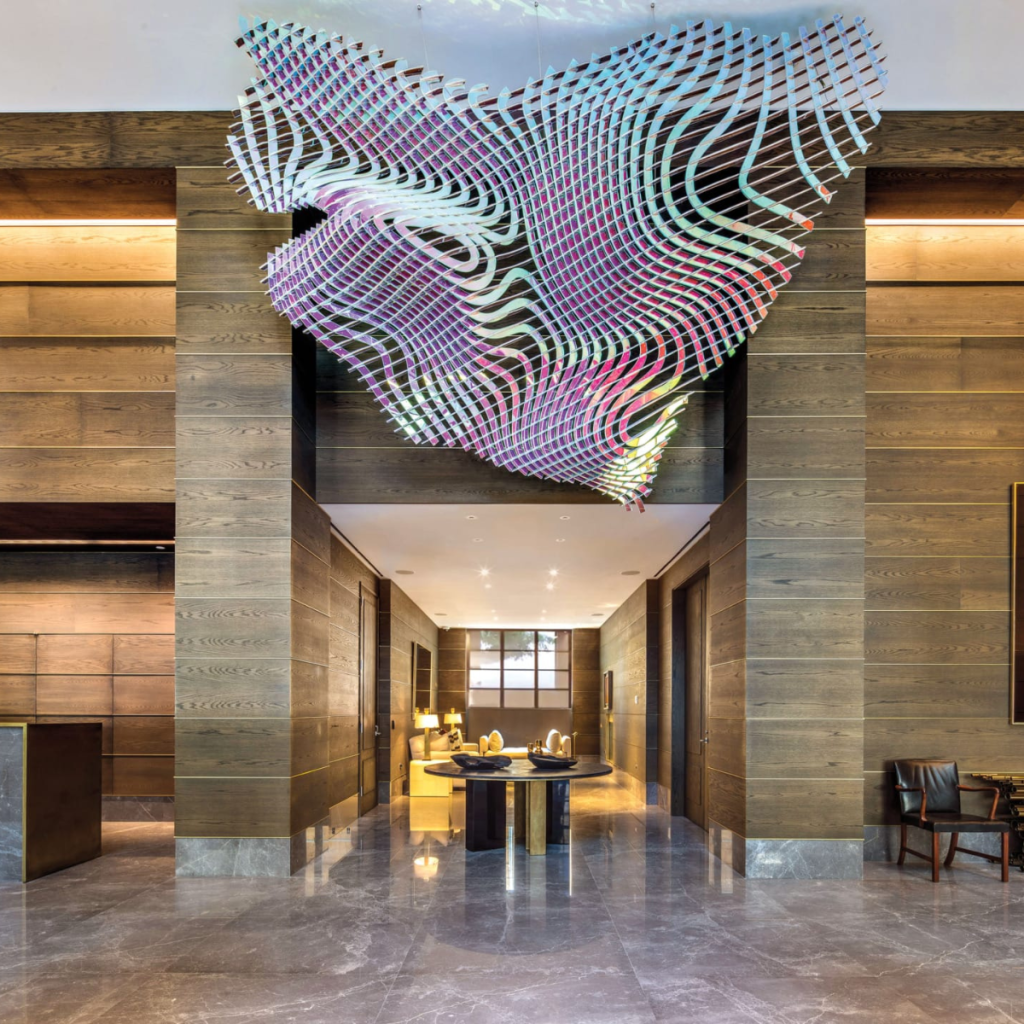
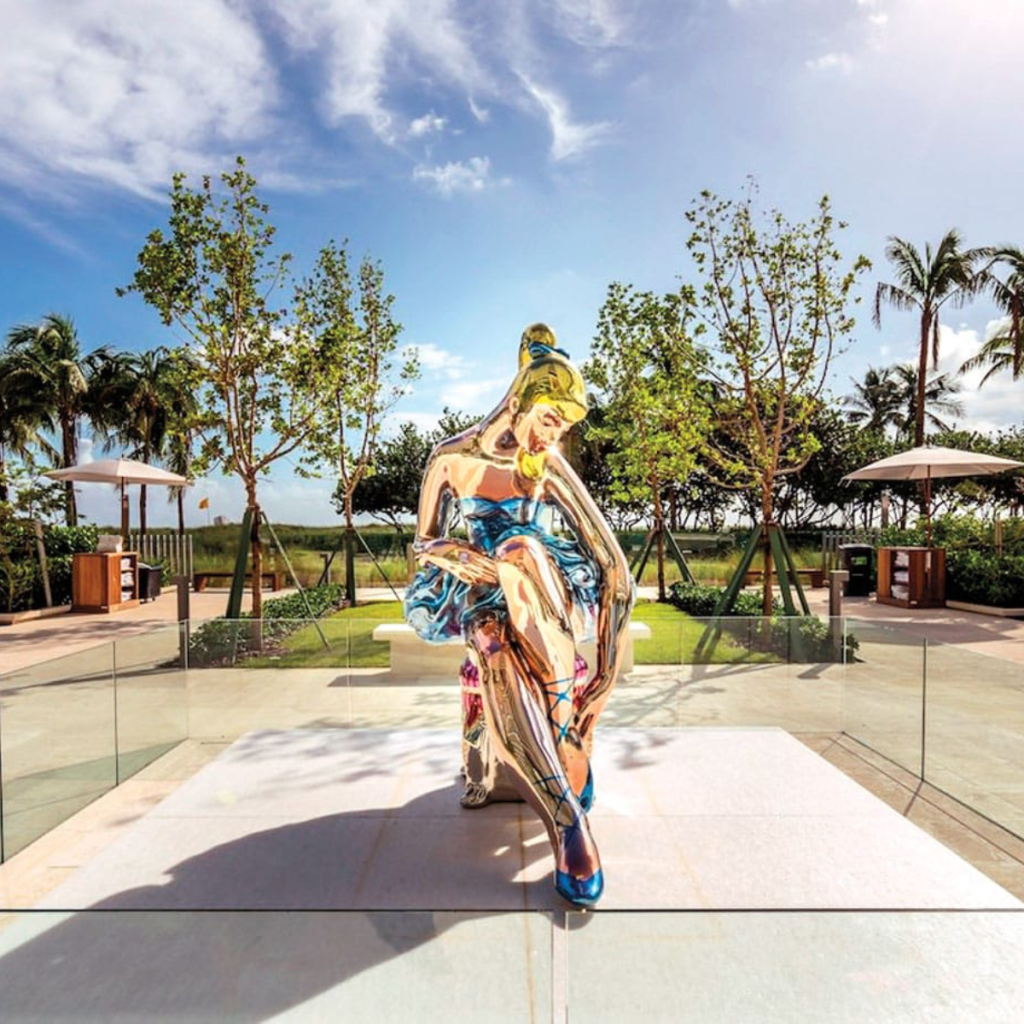
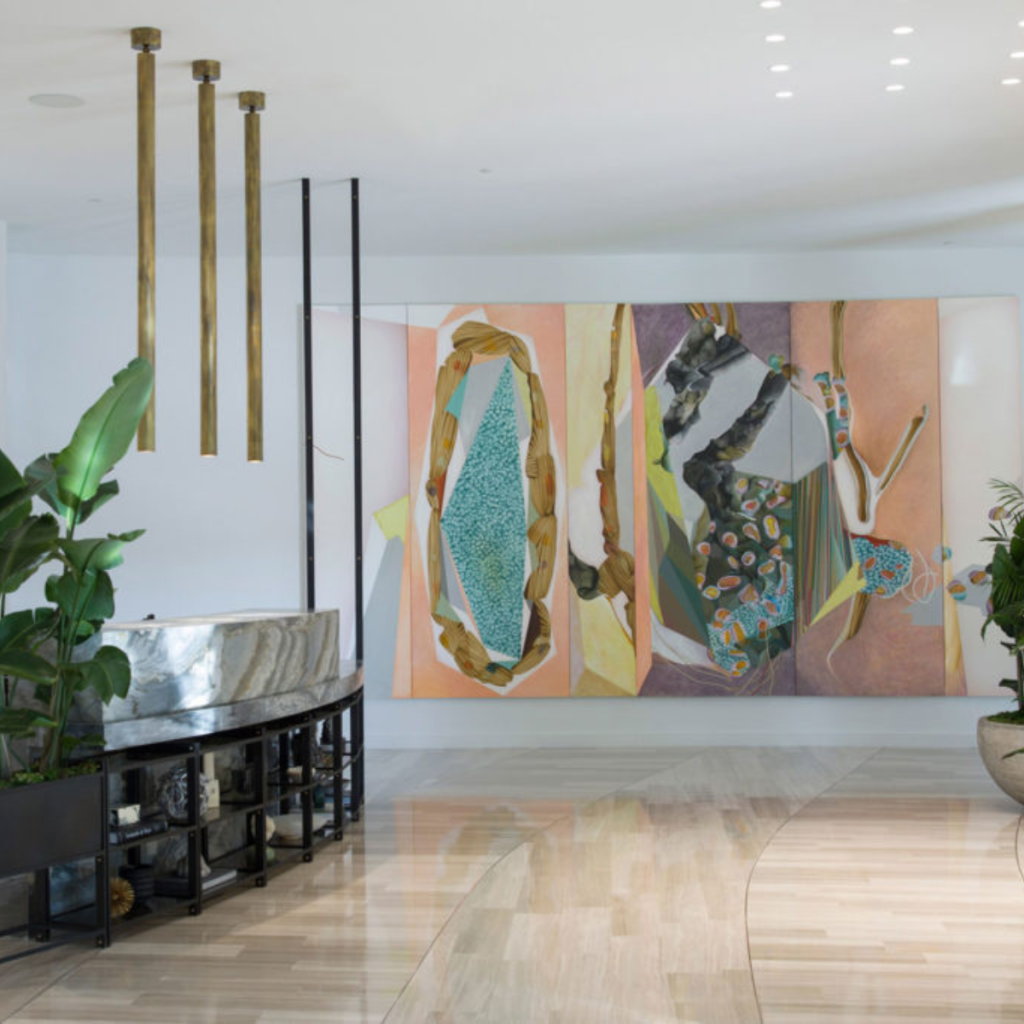
Miami offers a fascinating perspective, because the relationship between art and development is already deeply present in the city’s cultural identity. At One Park Grove, works from developer Jorge Pérez’s private collection are displayed in the lobby and public areas of the OMA-designed residential tower, with interiors by Meyer Davis. Interior Design described how art became part of the building’s public spaces, including sculpture and mural works that give the arrival areas a strong cultural layer. Some may think of this as art used to signal prestige. For me, it speaks to something more valuable: the ability of a building to introduce itself through culture before any words are spoken. It tells the visitor that the project is not only about surface, but about a certain way of seeing.
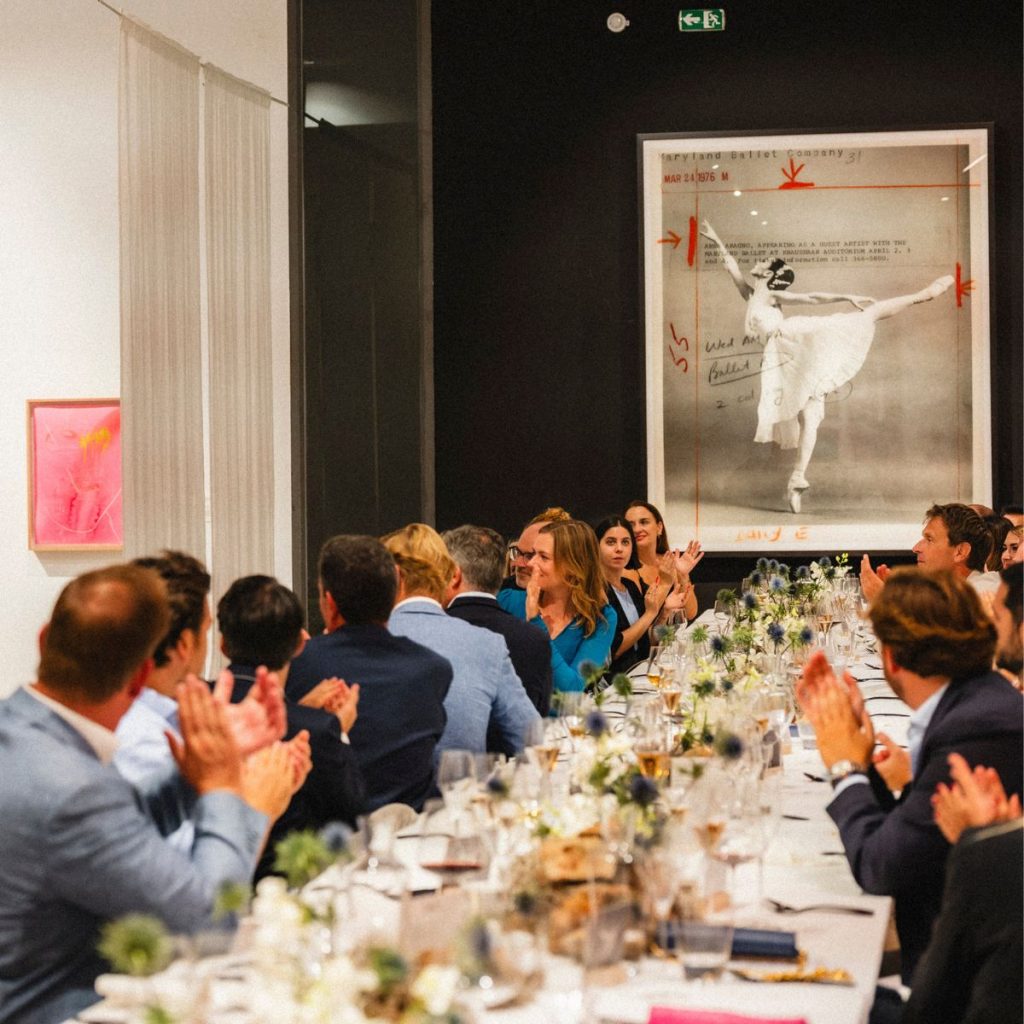
Park Grove is interesting because art was not only placed inside the building; it was used to gather people around the project. A private dinner and cocktail was hosted in honour of Jaume Plensa at the Park Grove sales gallery, bringing collectors, gallery clients, friends and developers into conversation around the future residences. This is the part I find especially relevant. Art can create a reason for people to come together before a building is even fully lived in. It can turn a sales gallery into a cultural room, a launch into a more meaningful encounter, and a property presentation into something that feels less transactional and more memorable.
This is something we have experienced in our own way through VELVENOIR’s art dinners and cultural encounters. Our art dinner in Mallorca, for example, reminded me again how naturally people connect when art becomes the starting point. The conversation changes. People look more closely. They ask questions. They share memories, associations, tastes and personal references. These formats can be translated beautifully into the luxury residential world and, in many places, already are. A sales apartment can become a temporary exhibition. A penthouse can host an intimate dinner around an artist or collection. A lobby can introduce local artists. A private residents’ lounge can become a place for talks, salons or gallery collaborations. Art gives the property a social life before the buyer has even moved in.
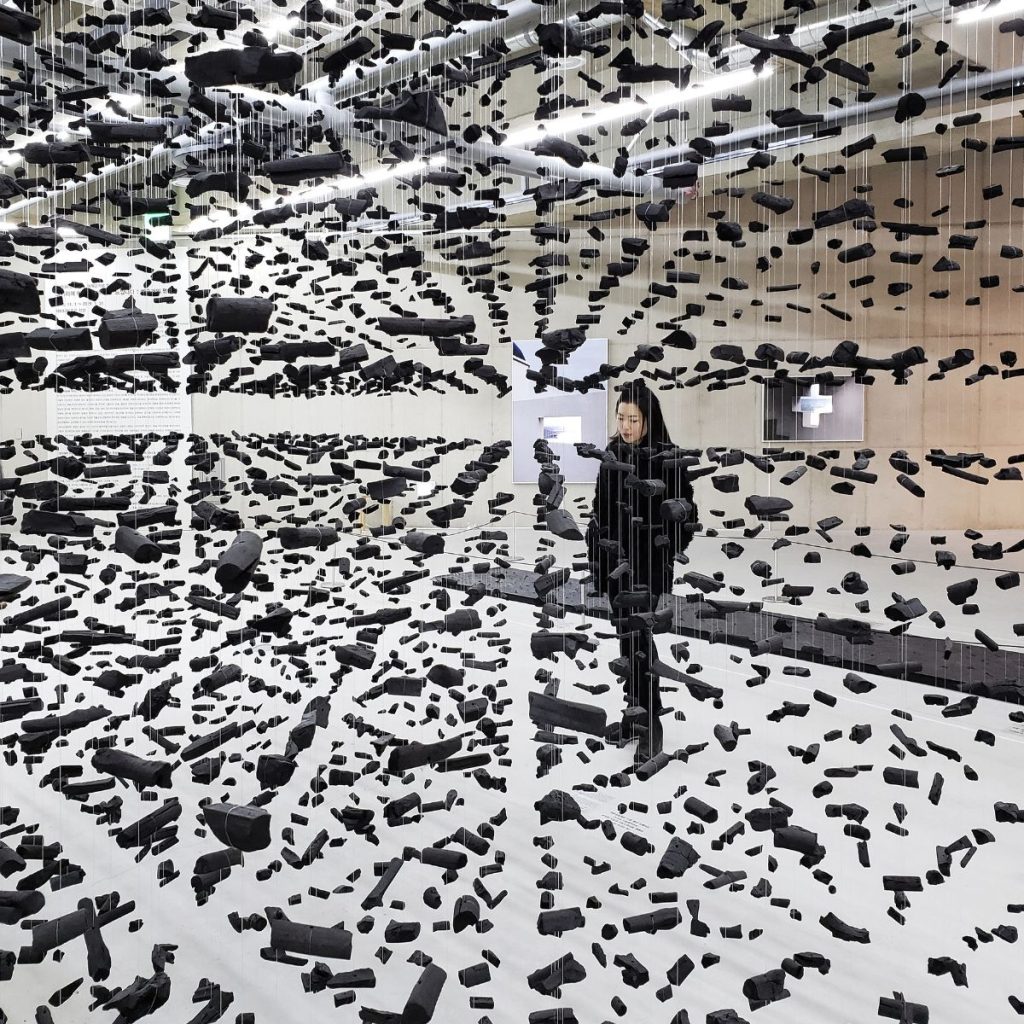
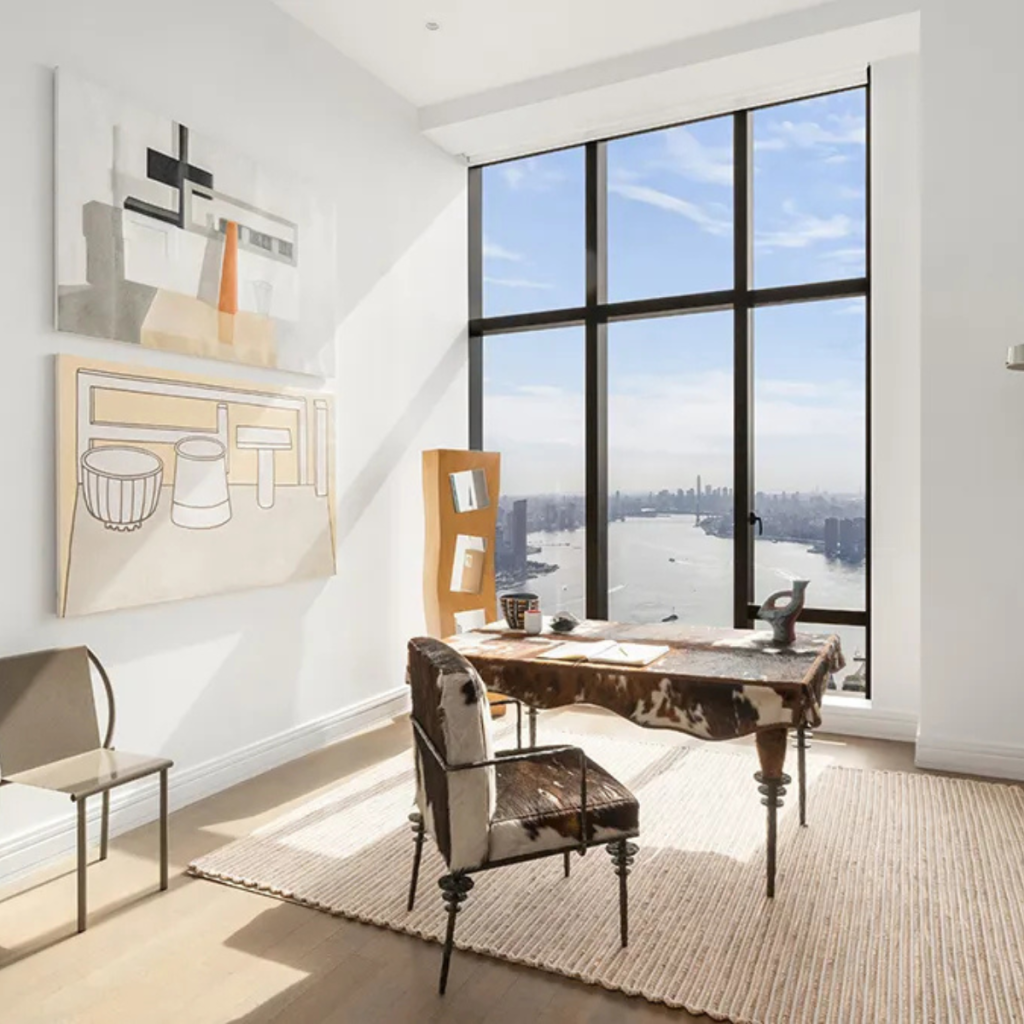
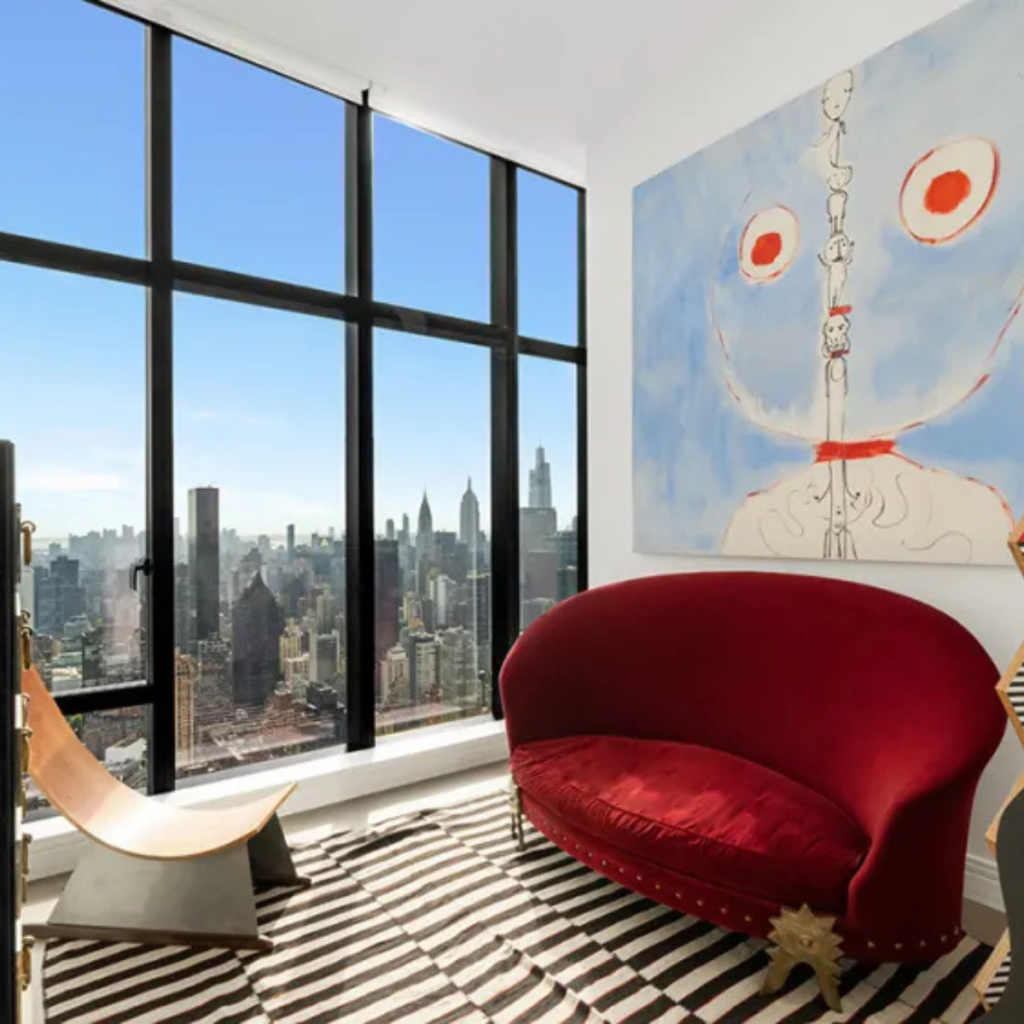
Hong Kong brings another layer into this conversation. K11 ARTUS describes itself as a luxury residence rooted in the idea of an “artisanal home,” while its Joyce Wang-designed penthouse brings together bespoke finishes, furniture and art pieces in a way that celebrates craftsmanship and creative individuality. At LA MONTAGNE, a Hong Kong show flat by Philip Liao & Partners was presented with the atmosphere of an art gallery, using furniture and collectible pieces to create a more elevated residential experience. Some may read these projects mainly through design. I read them through the question of cultural identity. What does a residence stand for? What kind of values does it communicate? How does craft, art and place become part of the way a buyer feels the project?
In Melbourne, Tim Gurner’s Saint Moritz is another development I find interesting, because it shows how luxury residences are increasingly imagined as complete worlds. GURNER describes Saint Moritz as “an extraordinary world,” with a strong focus on refined interiors, detail, wellness and emotionally charged luxury. In such environments, art has the potential to do more than complete a room. It can shape the arrival, give common areas a more distinctive voice, and bring a human or cultural layer into spaces already defined by lifestyle and aspiration.
The same thinking is visible in the way luxury brokers speak about property today. SERHANT. describes the sale of a home like the positioning of a luxury brand, using strategy, storytelling and global exposure to elevate perception. Douglas Elliman has also highlighted homes where art collections are part of the way a property is presented. Some may say this is simply good marketing. For me, it confirms something I have felt for a long time: buyers do not respond only to rooms, materials and views. They respond to atmosphere, identity and the possibility of a life. and for me, art helps make that possibility visible.
Through our own work, I have seen how powerful this can be. With Adler Lodge in the Kitzbühel region, art helped give the estate a stronger sense of individuality within a visual world where alpine codes are already very familiar. Wood, stone, mountain views, fire, softness and comfort all belong to that context, but art can take the experience somewhere more personal. It can make the property feel more authored. It can help a potential buyer remember the feeling of the place rather than only the specifications. In our Venice, Los Angeles project, we were invited by the developers to curate a collection connected to California’s creative energy, bringing together a roster of local artists from emerging to well-established names.
The question was not simply what looks good in the space, but what kind of artistic language can support the identity of the property. That difference matters.
And perhaps this is the bridge I find most inspiring: the meeting point between culture and commercial reality. A developer needs distinction, but distinction cannot be forced. A broker needs a story, but the story has to feel true. A buyer needs emotional conviction, but that emotion cannot be manufactured through styling alone. An interior designer needs artworks that support the spatial vision, but the works should still carry artistic integrity. A local context can add depth, but only when it is approached with care rather than borrowed as a surface reference. And behind all of this sits the practical responsibility of sourcing, procuring, insuring, framing, transporting, installing and documenting the collection properly. When these elements are held together, art becomes part of the value system of the project.
What matters to me is that art is approached as a considered programme. Not as culture added on the surface, not as a quick visual answer, and not as something that simply makes walls look more complete. A real art programme can shape perception, support local and international artists, create experiences and give a property a more distinctive voice. It can move from the lobby to the penthouse, from the sales apartment to the private dinner, from the first viewing to the long-term identity of the building. For me, this is where art and luxury residential real estate meet in a way that feels contemporary, meaningful and commercially intelligent. Some may think the opportunity lies in making spaces look more expensive. I believe the deeper opportunity lies in making them feel more considered, more memorable and more connected to the place, the people and the stories they are meant to hold.