Curating and Building Art Collections for Well-Being
In recent years, the way we speak about well-being has widened. It no longer belongs only to treatments, rituals, or wellness programs. It has become something quieter and more fundamental – woven into how we design spaces, what we choose to live with, and how environments support the nervous system day after day.
In our work at VELVENOIR, we see how art sits at the center of this shift. A thoughtfully curated collection can soften a room, anchor attention, and create a sense of belonging long before a guest or resident could explain why.
Well-being, in this sense, does not begin with an amenity.
It begins with how a space makes us feel.
Across different traditions, there is a shared understanding: our surroundings shape our inner state.
In Ayurveda, one’s environment is considered an important influence on balance and health. Designs and colors are often adapted to support the dominant dosha (Vata, Pitta, Kapha), and there is a growing practice of integrating Ayurvedic principles into interior design to create spaces that nourish body and mind.
Feng Shui is an ancient Chinese approach that focuses on harmony in the built environment. It works with spatial arrangement, forms, and imagery to support the flow of chi – the life force that, in this tradition, moves through people and spaces.
In Traditional Chinese Medicine (TCM), the Five Elements – Wood, Fire, Earth, Metal, and Water – help explain relationships between the body, emotions, and the wider environment. Each element is associated with qualities, seasons, and emotional tendencies, and practitioners sometimes use this lens when advising on lifestyle and surroundings.
Color psychology research, from a more scientific standpoint, suggests that color can influence mood, arousal, and perceived comfort. Studies indicate that warmer colors like red and yellow tend to increase energy and alertness, while cooler tones such as blue and green are often associated with calmness, relaxation, and improved concentration.
Taken together, these perspectives – some traditional, some scientific – echo a similar truth: what we see, feel, and move through every day has a measurable impact on our inner landscape.
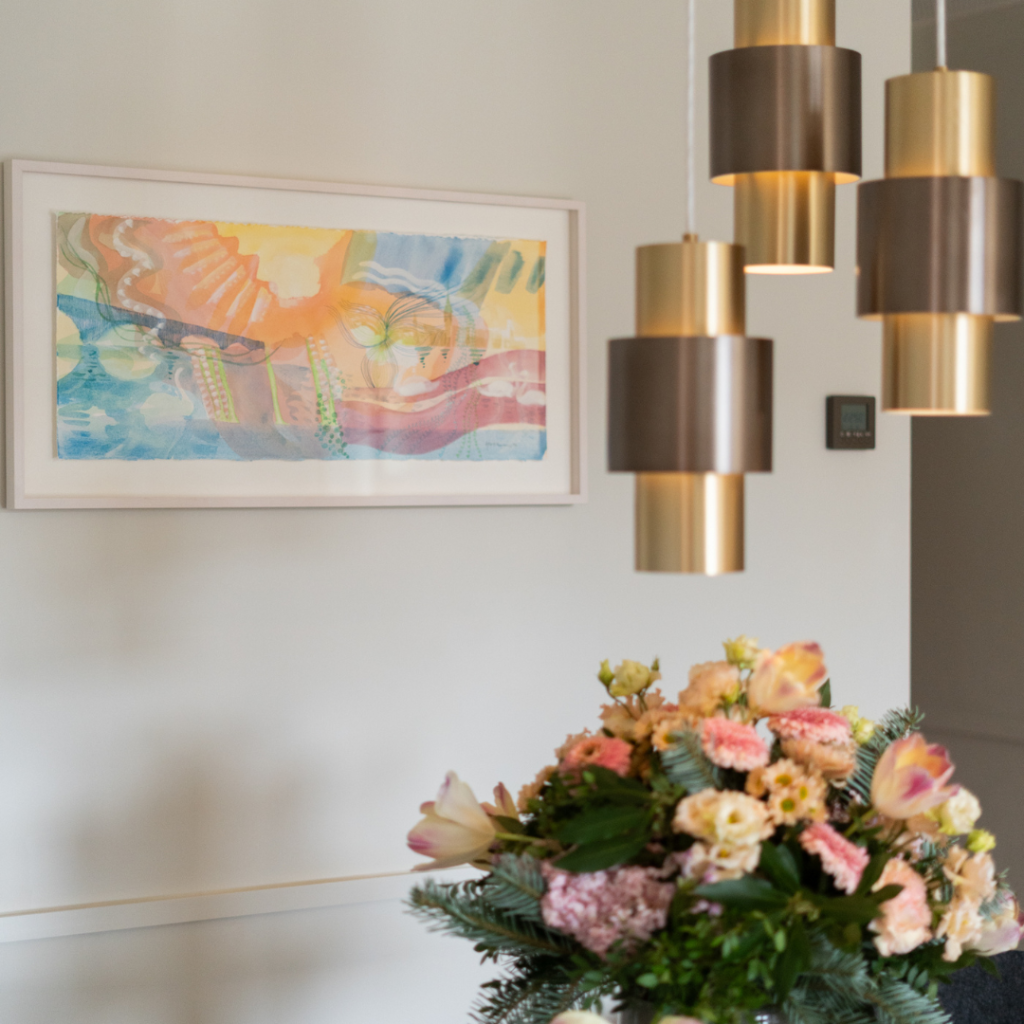
Photo Credit: The Florentin, Daniel Schäfer
Photo Credit: The Florentin, Daniel Schäfer
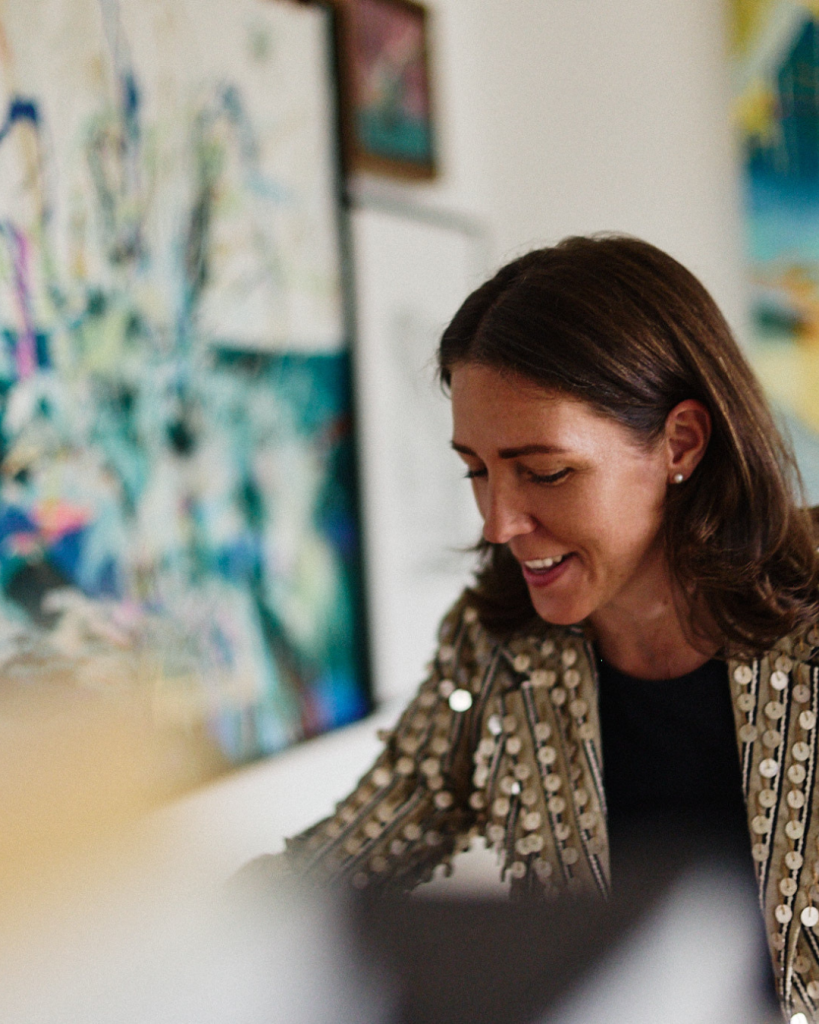
Photo Credit: Alex Lake Zurich
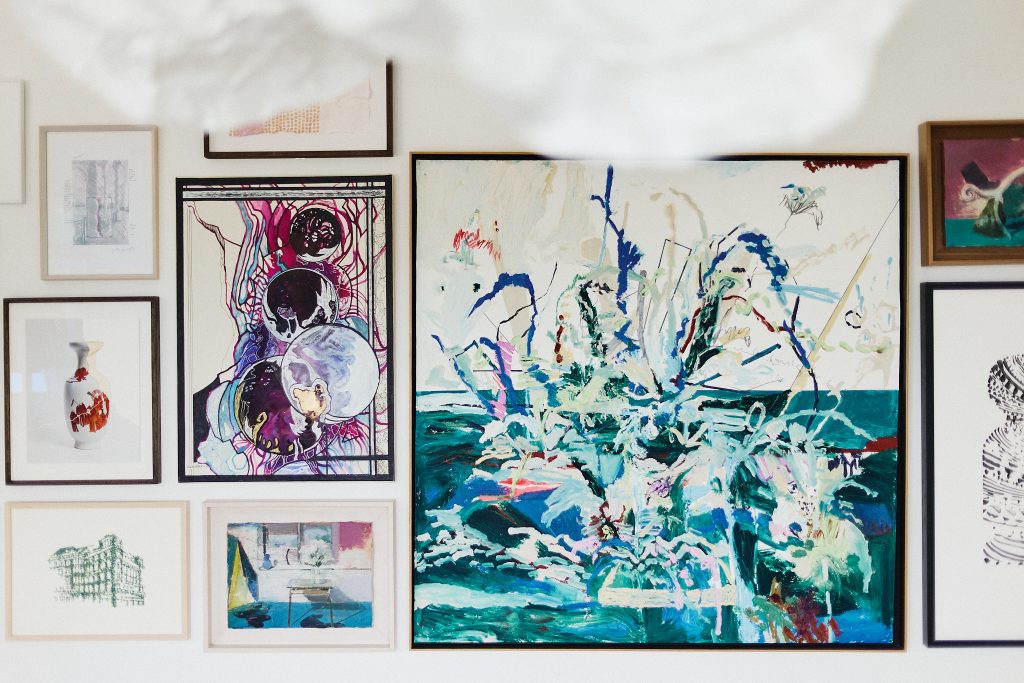
Photo Credit: Mandarin Oriental Savoy Zurich, Diana Iskander
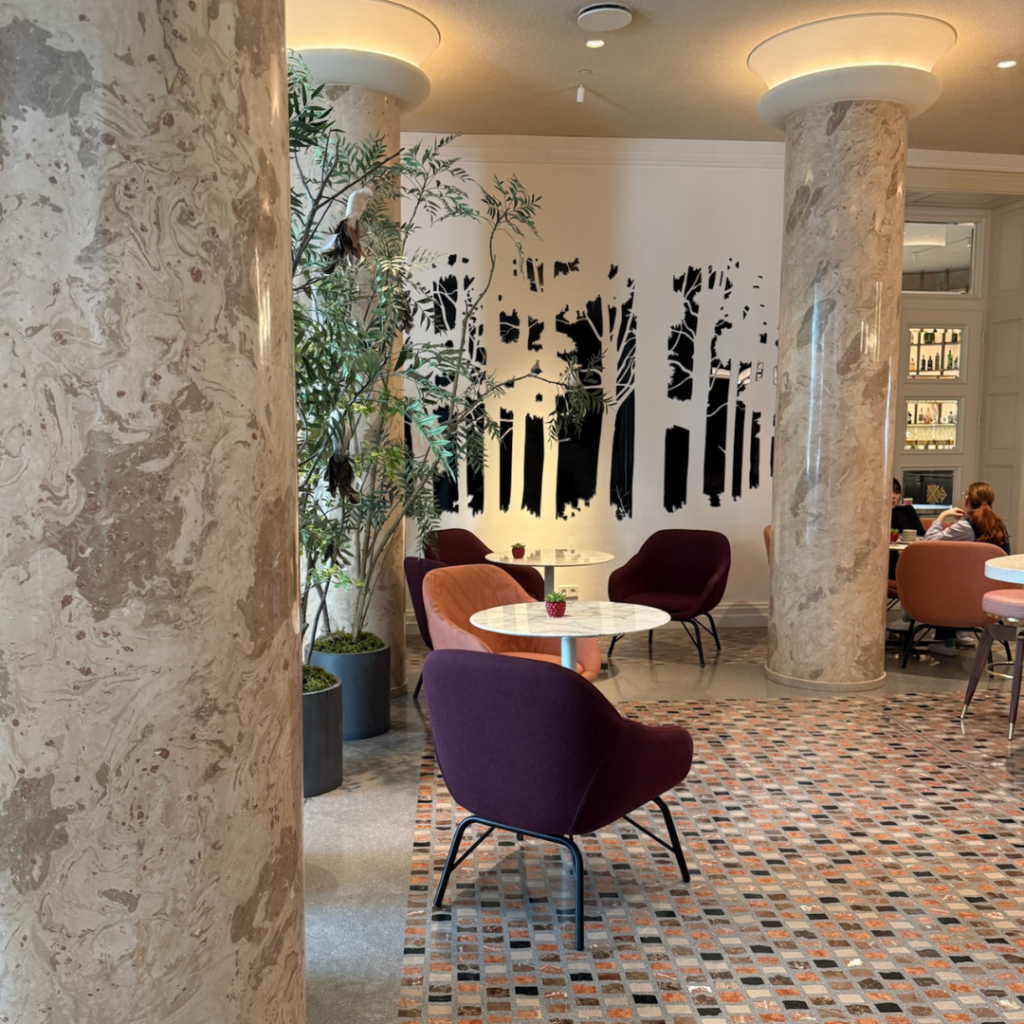
Photo Credit: Mandarin Oriental Savoy Zurich, Diana Iskander
Photo Credit: Mandarin Oriental Savoy Zurich, Diana Iskander
When we curate art collections for hotels, clinics, and private residences, we don’t begin with style alone. We begin with a feeling.
We ask:
How should this space feel in the body?
Grounded, expansive, restorative, quietly energising?Which emotions do we want to gently support?
Ease before sleep; curiosity in a lobby; trust in a clinic; a soft sense of arrival in a guest room.Where is calm needed – and where is vitality appropriate?
Ayurveda might suggest warmer tones and gentle tactility for someone who feels ungrounded, while color psychology would recommend cooler, nature-linked hues where stress is high.How can we create coherence without repetition?
Feng Shui and TCM both value balance: no single element dominating, but a conversation between light and shadow, movement and stillness, openness and containment.
From there, art becomes our primary language.
A painting with a clear horizon line might introduce a sense of spaciousness.
A photographic work in soft, desaturated tones can bring down overstimulation in a busy corridor.
A piece rich in texture and earth tones can offer grounding in a space that feels overly sleek or technical.
We think of these decisions not as decoration, but as emotional architecture.
From Theory to Practice: Curating for How a Space Feels
Elements, Doshas, Colors: Quiet Frameworks Behind the Scenes
We don’t use Ayurveda, Feng Shui, TCM, or color psychology as dogma. Instead, we treat them as quiet frameworks that help us make more sensitive decisions.
A series of artworks inspired by water – flowing forms, cool tonalities – can support the sense of calm and introspection that both TCM’s Water element and color psychology connect with lower arousal and reflection.
Earthy, textured works may echo the “Earth” element in TCM – stability, nourishment, center – and align with Ayurvedic thinking that many people benefit from grounded, warm, tactile environments.
In spaces that need alertness and activity, such as certain communal zones, we might intentionally integrate more contrast, dynamic forms, or carefully dosed warm colors, drawing on research that such palettes can increase perceived energy and engagement.
These lenses do not replace curatorial intuition or the artistic concept. They deepen it. They remind us that a collection is always in dialogue with bodies, emotions, and nervous systems in real time.
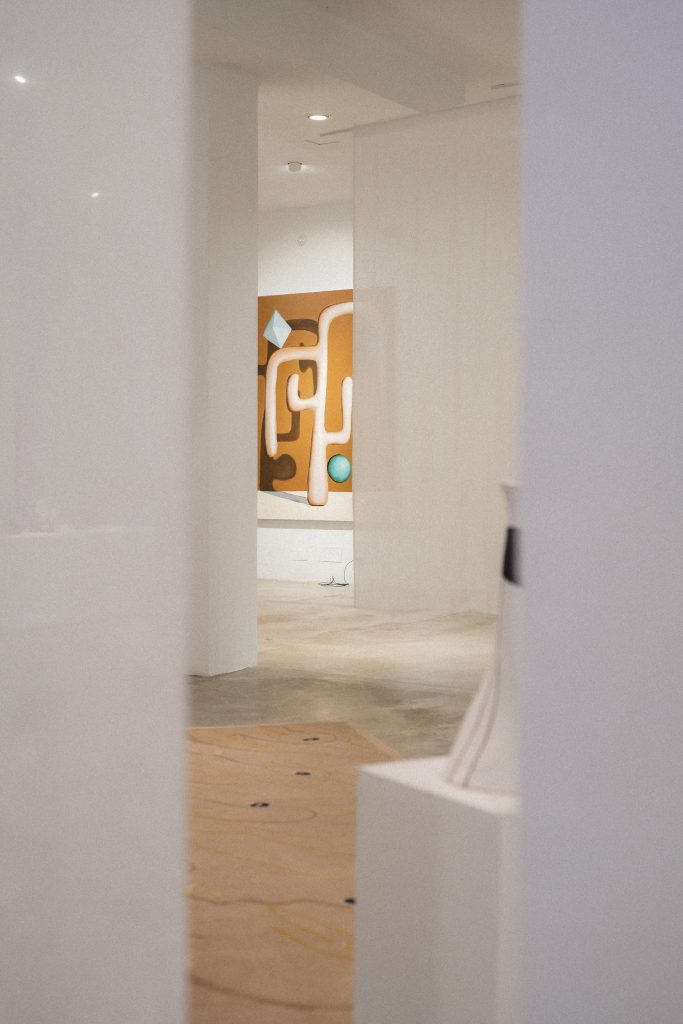
The Role of Stillness and Energy
Many contemporary thinkers also point toward the relationship between inner state and environment.
Deepak Chopra writes:
“In the midst of movement and chaos, keep stillness inside of you.”
For us, this stillness is not only internal. It can be supported externally by the way a room is held: by its images, its empty spaces, by the quiet invitation to pause in front of an artwork that doesn’t demand, but gently receives attention.
Joe Dispenza, from a different angle, asks:
“Does your thinking create your environment, or does your environment create your reality? To change is to be greater than your environment.”
In hospitality and private spaces, we experience this question daily. A considered art collection can help people step, even briefly, out of habitual states: away from constant stimulation, into a more spacious, reflective inner posture.
Collecting as a Journey of Well-Being
For our clients, whether they are hotel owners, clinic founders, or private collectors, building a collection for well-being is not about avoiding intensity or choosing only soothing images. It is about clarity of intent.
What do we want people to feel here?
Which stories are we honouring?
Which artists’ visions are we inviting into this shared field?
At VELVENOIR, we see collecting as a journey of alignment:
between inner values and outer space, between the lives of our clients and the lives of artists, between tradition and contemporary understanding of the mind, body and soul experience.
When art is chosen with care and placed with sensitivity, it does more than complete a room.
It steadies.
It connects.
And, quietly, it supports the well-being of everyone who enters and stays.